
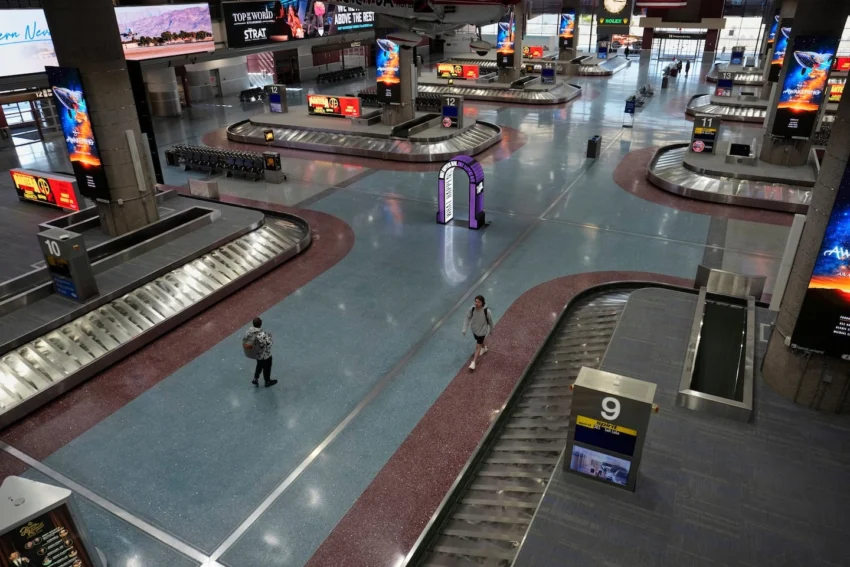
Experts are predicting a continued decline in international travel to the United States, attributed largely to the return of former President Trump to the White House. This decrease has been particularly felt in cities heavily reliant on foreign visitors, such as Las Vegas and Buffalo, which experienced a notable absence of Canadian tourists this summer.
Buffalo’s local tourism organization, Visit Buffalo Niagara, launched a campaign to attract Canadian visitors, complete with a billboard message stating, "Buffalo Loves Canada." Yet, despite initial interest, the expected influx of tourists did not materialize, prompting concerns about the broader implications of the current political climate on tourism.
Analysts and officials cite Trump’s policies, including tariffs and heightened immigration restrictions, as key factors driving away potential visitors. The World Travel & Tourism Council highlighted in a recent report that the U.S. is projected to be the only country among 184 studied where foreign spending in tourism is expected to decline by 2025. This has raised alarms about the U.S.’s diminishing allure as a travel destination.
Travel research indicates that international arrivals have already dropped significantly since the start of the year, with over three million fewer overseas visitors recorded compared to the previous year. Various regions have noted a decline in travelers from key markets like Western Europe and Asia, although there have been increases from countries like Argentina and Brazil.
Despite these setbacks, some areas have thrived. For instance, Wisconsin’s Door Peninsula saw an increase in domestic visitors, bolstering local businesses as foreign tourism declined. Conversely, local tourism officials in Washington, D.C. are strategically responding to negative perceptions by launching campaigns that showcase the capital’s more welcoming aspects.
The U.S. tourism industry now faces multiple challenges, including rising travel costs and ongoing political tension, leading to a pervasive sentiment that foreign tourists might feel unwelcome. Notably, international events, such as a swing dancing championship in New York City, have even been postponed due to concerns expressed by foreign participants about their safety and welcome status in the U.S.
As the summer season concludes, visitor data revealed that Canadians were among the most hesitant to travel to the U.S. Notably, more Americans crossed the border into Canada this past summer than Canadians returning to the U.S., marking a significant shift in travel patterns.
Kaler from Visit Buffalo Niagara emphasizes the emotional connectivity that locals hold with Canadian visitors, stating, “We will always welcome Canadians back when the time is right.”