
CHONGQING, China — Health officials in southern China have launched an aggressive campaign against an outbreak of chikungunya fever, which began in July and has resulted in over 10,000 cases in Guangdong province alone. The outbreak is notable as it is the largest ever recorded in the country, with Foshan, a manufacturing hub, being the most severely impacted city, experiencing over 600 new cases daily at its peak.
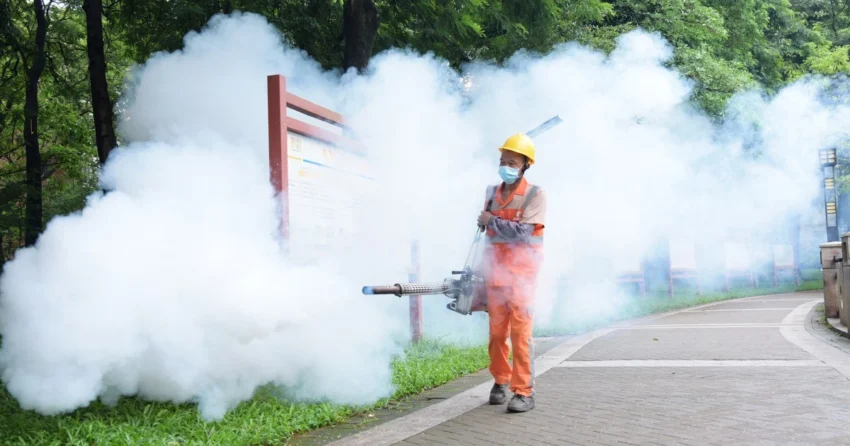
Responding to the crisis, authorities implemented containment strategies reminiscent of their strict zero-Covid measures. This “detect and eliminate” approach involved the regular spraying of insecticides and enforced reporting and quarantine protocols for suspected cases.
The spike in chikungunya cases is attributed to warmer weather and a rapidly spreading viral strain. As global temperatures rise, similar patterns of disease transmission are observed worldwide. A recent study indicated that over 270,000 chikungunya cases had been reported globally this year, with 110 associated deaths.
While the Centers for Disease Control and Prevention (CDC) has warned U.S. travelers to exercise caution due to the outbreaks in China and other countries, no locally acquired cases have been reported in the U.S. since 2019.
Chikungunya, first identified in Tanzania in 1952, is transmitted via mosquito bites and is not contagious between people. Symptoms can include debilitating joint pain, though it is rarely fatal. There is no specific antiviral treatment, but symptom relief is the focus of care, and vaccination is advisable for travelers to affected areas.
To combat the outbreak, local authorities in China have mobilized grassroots workers to disperse insecticides and eliminate standing water where mosquitoes breed. Clinics are equipped with mosquito-proof beds for patients, and the public has been urged to adopt preventative measures such as using window screens and mosquito coils.
Authorities have enforced compliance with health measures, and while some citizens criticize the strict approach as excessive, others appreciate the rapid response. As of late August, the number of daily new cases in Foshan had dropped significantly, leading to the lifting of its public health emergency.
The ongoing challenge is the influence of climate change, which is creating new habitats for disease-carrying mosquitoes, increasing the risk of outbreaks. Experts emphasize that the interplay of human activity and environmental factors necessitates ongoing vigilance against infectious diseases in a rapidly changing global landscape.