
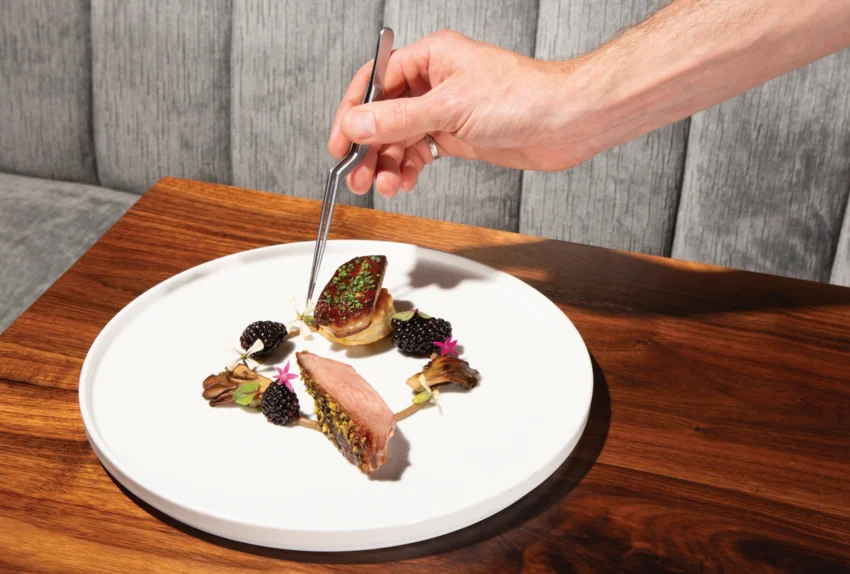
A new, larger (and more expensive) tasting menu progresses from recognizable to unfamiliar
In the competitive world of extreme fine dining, chefs consider themselves innovators first. They aim to dazzle with technical prowess, exclusive ingredients, and unique presentations. Such restaurants thrive only in cities with affluent populations like New York, San Francisco, Chicago, Philadelphia, and recently, Atlanta, where luxurious tasting menus with steep price tags are the norm. Elsewhere, this culinary extravagance is often ignored or simply consumed as entertainment on television.
I often ponder how I would perceive what’s often dubbed as tweezer cuisine were I a wealthy man with a hearty appetite. Would I enjoy spending three hours in a seat, delicately nibbling on tiny leaves and minute flowers artistically placed on small pieces of protein with tweezers?
Tweezers of varying sizes are actively utilized in the kitchen at Lazy Betty, where Ron Hsu, alongside his colleague and friend Aaron Phillips, meticulously arrange tiny, avant-garde clusters of ingredients on plates designed for culinary admiration.
The moving of Lazy Betty to its new location, previously Empire State South at the corner of 10th and Peachtree Street, initially had me skeptical. Is this the end of the beloved courtyard? Who would pay $300 per person to dine overlooking a bocce court? The entrance now resides around the corner, leading through a starkly lit office building lobby. Inside, the dining area is transformed, featuring smooth caramel-toned wooden dividers, a newly positioned bar, and tables topped with raw wood. The ambiance here starkly contrasts with the casual atmosphere of its predecessor, exuding a serene and luxurious calm, with no noise from the adjacent smaller dining areas.
Moving Lazy Betty from DeKalb Avenue to Midtown appears a strategic move by the newly Michelin-starred chef, Ron Hsu, attracting a specific demographic. The menu at the relocated restaurant now offers an expanded variety of dishes (now seven courses, along with additional tastes and treats) and increased prices to $225 excluding drinks. The menu is thoughtfully designed to transition from familiar to novel flavors. It starts with a bread service featuring citrusy buns and richly layered biscuits served with strikingly red hibiscus butter. This is followed by a visually engaging presentation of tiny savory morsels set against a backdrop of moss and pine needles. The opening course, featuring a prominent roll of raw bluefin tuna adorned with a delicate brik pastry, lemon crème fraiche, and caviar, showcases Hsu’s culinary prowess. Subsequent dishes delve into a more elaborate gastronomic exploration, like the layered terrine of foie gras and cherry accompanied by radicchio, poached endive, roasted beet, an oat tuile, and small drops of yogurt meringue.
I often find myself drawn to the slightly larger, yet simpler mini-dishes, such as a plate featuring duck with a precisely cooked slice of breast, some leg confit enclosed in a vol-au-vent, along with foie gras, caramelized miso, and streams of blackberry gastrique. There’s a particular dish I favor: butter-poached Icelandic cod, about the size of a large scallop, presented with peeled fava beans, green tomato caviar, and a country ham broth served from a petite pitcher, which strikes a perfect balance for me.
Hsu shared that he focuses on the finest aspects of each ingredient—for instance, the very tip of a white asparagus spear. Yet, I found myself navigating a culinary landscape where, absent my waiter’s insights, elements such as ramp-filled morels, subtle onion and fava blossoms, or the nuances of various ringlets and tendrils, might have eluded me.
The dessert creations, led by Gus Castro, are outstanding. A zesty granita paired with coconut foam stands out as a brilliant palate cleanser. Following this, a deeply flavorful raspberry mousse dome, elegant petits fours showcasing accessible yet forward-thinking tastes, and a selection of mignardises, provide a refreshing revival for taste senses overwhelmed by a rich array of earlier garnishments.
Those seeking a more casual experience might prefer to sit at the bar or in the lounge to order from the a la carte options. Excluding the caviar service, the more intricate offerings found in the dining room, such as cured kampachi with pineapple consommé, chili peppers, finger limes, pomegranate, and mint or a brioche doughnut topped with whipped foie gras and raspberry coulis, aren’t available. Instead, it’s possible to indulge in simpler pleasures like a glass of champagne, a few oysters, or perhaps an enticingly smoky bourbon cocktail named Attitude Adjustment, complete with real smoke encapsulated in a glass sealed with a stylish cork.
I am a big fan of Ron Hsu. Personally, he is relaxed and hospitable. Like his most famous previous boss, the sensational Eric Ripert of Manhattan’s Le Bernardin, he is French-trained and obsessive. I believe in him as a madly talented chef whose attitude toward food should perhaps prioritize intensity of taste over artistic prowess.
This issue appears in our August 2024 issue.