
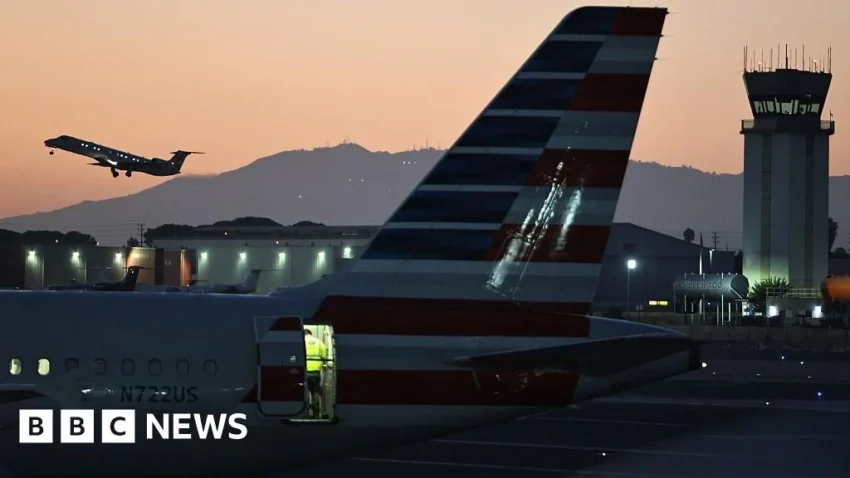
US air travellers are currently facing significant disruptions due to a government shutdown which has created a shortage of air traffic controllers. As of Tuesday, many airports across the country, including Nashville, Dallas, Chicago, and Newark, have reported increased delays affecting thousands of flights.
The situation intensified on Monday when Hollywood Burbank Airport in California went without air traffic control staff for nearly six hours, leading to chaos and delays. Transportation Secretary Sean Duffy noted that some controllers are calling in sick amid stress brought on by the current shutdown, which has now entered its seventh day. Reports indicate that staffing levels have occasionally dropped to just 50% in some regions.
Air traffic controllers, deemed essential workers, are obliged to work without pay during shutdowns. By Tuesday afternoon, approximately 3,200 flights had been delayed, and disruptions were also noted at airports in Newark, Phoenix, Denver, and Las Vegas, with delays ranging from 40 to 60 minutes.
The Federal Aviation Administration (FAA) has had to issue ground delays at major airports, including Chicago’s O’Hare, and Nashville International Airport announced a reduction in flights due to staffing shortages, which will likely continue "until further notice." Drew MacQueen from the National Air Traffic Controllers Association highlighted that controllers are feeling overwhelmed and stressed without remuneration.
The shutdown itself stemmed from Congress failing to resolve a budget dispute, beginning on October 1. Around 750,000 federal employees are currently on unpaid leave, while essential workers remain on duty without pay. The National Air Traffic Controllers Association has cautioned members against participating in job actions that could lead to termination, emphasizing the importance of maintaining safety in air travel.
Expressing the need for focus, Secretary Duffy remarked that air traffic controllers should not be burdened with financial worries while managing airspace, underscoring that public safety remains the priority amidst the chaos. Historically, strain on air travel has led to quick resolutions in similar situations—highlighted by a government shutdown in 2019 that ended following significant disruptions in airline operations.
For further information, explore these links: