
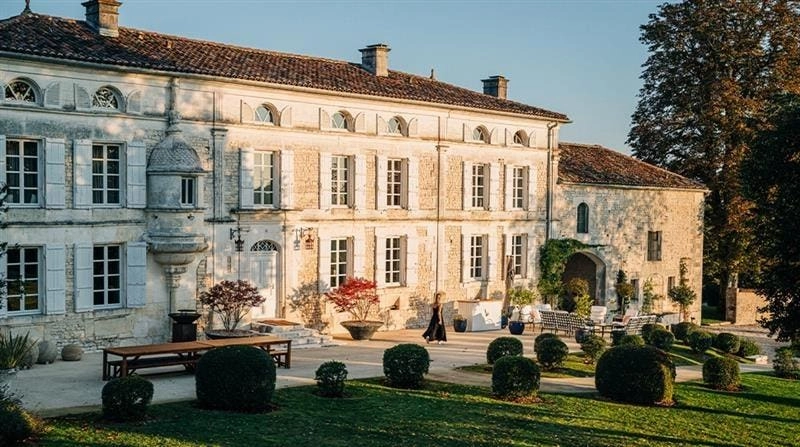
Photographer Teal Thomsen and cinematographer David Markun are a talented duo who specialize in travel photography and cinematography. With extensive experience capturing remarkable images, they have worked with notable brands like Belmond and Four Seasons, and their work has been featured in Netflix productions and the Oscar-winning short film Two Distant Strangers. Recently, they visited the enchanting Le Logis manor in Cognac, which served as the backdrop for their creative process while they documented the stunning 16th-century chateau and its vineyards.
During their stay, Thomsen described Le Logis as a fairytale-like chateau set in picturesque surroundings. She praised the hospitality, food, and unique experiences offered, noting that each meal felt special and different. Markun echoed her sentiments about the wonderful staff and curated experiences they enjoyed at the manor.
When asked about their favorite photographs from the trip, Thomsen initially hesitated, mentioning the vast amount of footage they collected but noted her fondness for the morning light inside the chateau and the golden-hour shots outside. Markun highlighted the importance of natural light in their photography, expressing gratitude towards their creative director’s advice to spend time observing the light before shooting.
Thomsen emphasized that the light in France particularly enhances the beauty of the scenery, mentioning a past project in Saint-Tropez where the sunlight created a stunning atmosphere. She further noted how the rich history and architecture of France allow for compelling visual storytelling.
Their photography styles reflect their passion for immersive experiences. Thomsen aims to transport viewers, focusing on warmth and natural light, while Markun approaches his work from a documentary perspective, seeking to represent the stories of his subjects authentically.
The couple discussed the challenges of capturing certain breathtaking locations, such as Namibia’s vast landscapes and the steepness of the Himalayas, acknowledging that some experiences can feel elusive through a camera lens.
As for future travels, both have exciting bucket-list destinations; Thomsen wants to explore Bhutan and Antarctica, while Markun expresses a fascination with extreme environments where he can tell powerful human stories.
For aspiring photographers, Thomsen advises focusing on composition that includes foreground, middle ground, and background elements, encouraging a more personal perspective in their shots. Markun underscores the importance of following the light for the best results, suggesting that capturing moments in favorable lighting can significantly enhance photographs.
Through their remarkable work, Thomsen and Markun continue to inspire aspiring photographers and document the world’s beauty, presenting a lens through which others can appreciate diverse cultures and landscapes.