
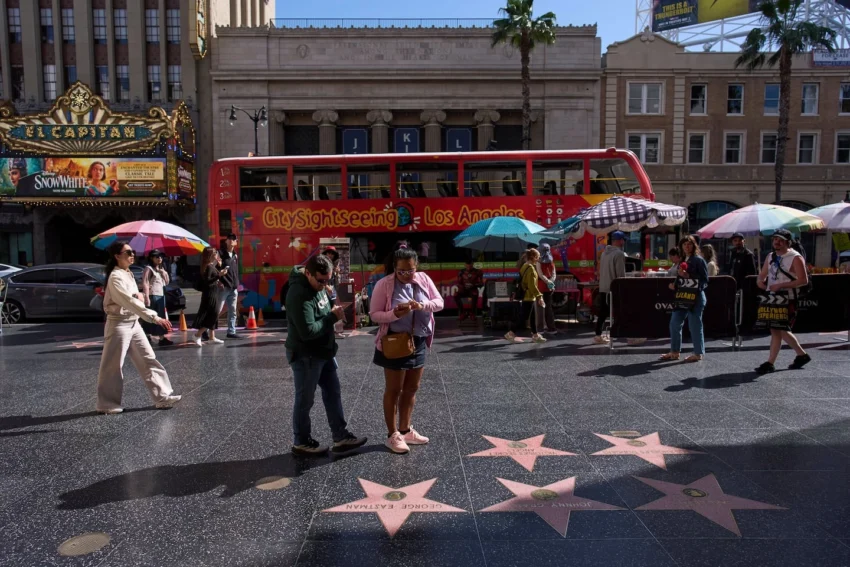
Olja Ivanic eagerly anticipated a visit from her cousins in Sweden, planning hiking trips in Colorado and sightseeing in Los Angeles and San Francisco. However, their plans crumbled after President Donald Trump’s disparaging comments towards Ukrainian President Volodymyr Zelenskyy during a February meeting, prompting her relatives to cancel and opt for a European vacation instead. Such reactions are becoming increasingly common among international travelers frustrated by Trump’s policies.
The US tourism industry had high hopes for 2025, projecting a recovery in international visitors to pre-COVID levels following a significant rebound in 2024. Unfortunately, reports indicate a substantial decline in international arrivals, as frustration rises over Trump’s tariffs and controversial rhetoric, along with alarming accounts of tourists being detained at the border.
Data from the federal government’s National Travel and Tourism Office highlights an 11.6% drop in overseas visits to the US in March compared to the previous year. This decline excludes Canadian arrivals, which will be reported later, but even air travel from Mexico saw a 23% decrease. In total, 7.1 million international visitors arrived in the US from January to March, showing a 3.3% decline from the same period in 2024.
Tourism Economics, a forecasting company, revised its earlier expectations of a nearly 9% increase in international arrivals to predict a 9.4% decline instead. The company anticipates the steepest reductions will come from Canada, where Trump’s contentious remarks and tariff threats have generated significant discontent among residents. In 2024, over 20.2 million Canadians visited the US, making them the largest group of international tourists.
Leisure bookings to US destinations from Canada dipped by 40% in March compared to last year, prompting Air Canada to reduce its flight schedules to popular spots like Florida and Las Vegas due to a lack of demand.
Despite the National Travel and Tourism Office’s optimistic forecast of a 6.5% increase in international visits, reaching 77.1 million this year, Tourism Economics warns that the negative perception of the US overseas could delay recovery until 2029. "The survey data is all indicating a significant mix of cancellations and a massive drop in intent to travel," remarked the company’s president, Adam Sacks.
In Canada, many are canceling trips as a statement against what they perceive as Trump’s bullying approach. Ian Urquhart had planned a summer trip to Las Vegas but instead chose to forfeit his $500 deposit in protest of Trump’s behavior. Similarly, other Canadian travelers are reevaluating their plans and opting for alternatives outside the US.
For European travelers like Pepa Cuevas from Spain, Trump’s presidency has scuttled previous plans to ski in Colorado. They chose Japan instead, expressing a loss of desire to visit the US due to their feelings about Trump.
Chinese tourists, another significant demographic for US tourism, are also exhibiting a decline in travel intent. Government data indicates arrivals from China fell nearly 1%, with a substantial impact on leisure trips to major US attractions.
Marco Jahn, CEO of New World Travel, noted a troubling 20% to 50% decrease in bookings over the past couple of months, particularly from markets in Scandinavia. A revenue management platform tracked a 44% drop in Canadian searches for US short-term rentals after Trump’s tariff announcements.
Amidst these declines, other global pressures also contribute to decreased travel to the US. Economic factors, such as the weak yen affecting Japanese tourists, have led to changing travel patterns as tourists seek destinations where currency values are more favorable.
Despite having loved her experiences in the US, frequent visitor Haruka Atomiya from Tokyo remains cautious about the country’s direction under Trump’s administration, stating she will continue to visit unless her safety becomes a concern.
As concerns about political climate and economic implications continue to influence travel decisions, the US tourism industry faces significant challenges ahead.