
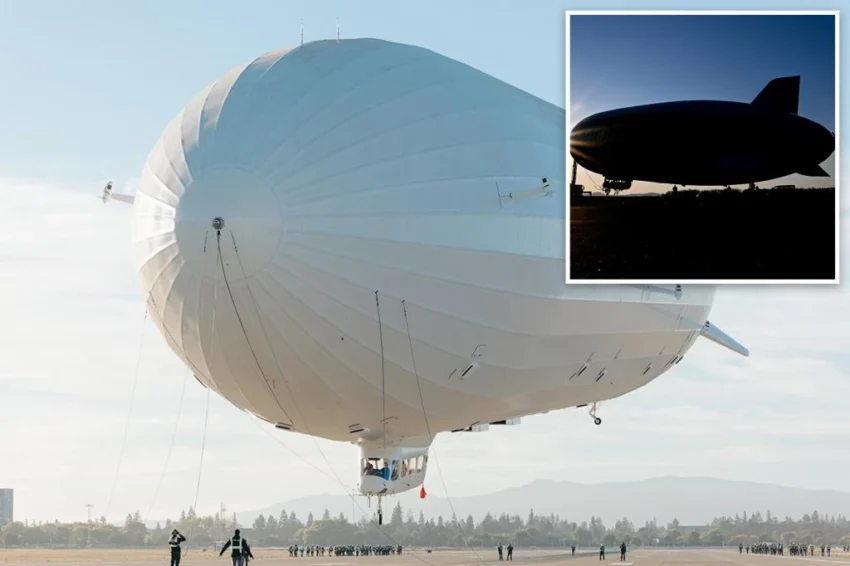
Companies are increasingly investing in zeppelins, believing that these modern airships may represent a new frontier in air travel. Unlike their Hindenburg-era predecessors, today’s zeppelins are designed to be safer and more environmentally friendly. According to a report, several start-ups are developing eco-friendly airships to cater to tourism and cargo shipping markets.
LTA Research, backed by Google co-founder Sergey Brin, has initiated tests on their airship model, the Pathfinder 1, which completed its first free flight in California last year. Other companies involved include FLYING WHALES, which is receiving support from the French government, and Hybrid Air Vehicles, aiming to produce lightweight airships made from advanced materials like carbon fiber and titanium.
The shift toward eco-friendly air travel aligns with mounting concerns about climate change. Advocates believe that these zeppelins could significantly reduce carbon emissions, consuming only a fraction of the fuel used by traditional jet engines. In contrast, current commercial jets burn thousands of gallons of kerosene, whereas these new designs could operate on just a few gallons of diesel combined with electric battery power.
To address safety concerns linked to hydrogen explosions, these zeppelins will utilize helium, a non-flammable resource. However, this has raised questions about their environmental credibility, given helium’s scarcity and the potential economic challenges associated with it. Critics like John J. Geoghegan, author of "When Giants Ruled the Sky," express skepticism about the long-term viability of this venture, citing both market support and economic constraints as significant hurdles.
Despite these challenges, zeppelin developers remain optimistic, with plans to establish factories and operational timelines to meet growing market demands. As the aviation industry seeks innovative solutions, the future of zeppelins may yet prove to be a key component in the evolution of sustainable air travel.