
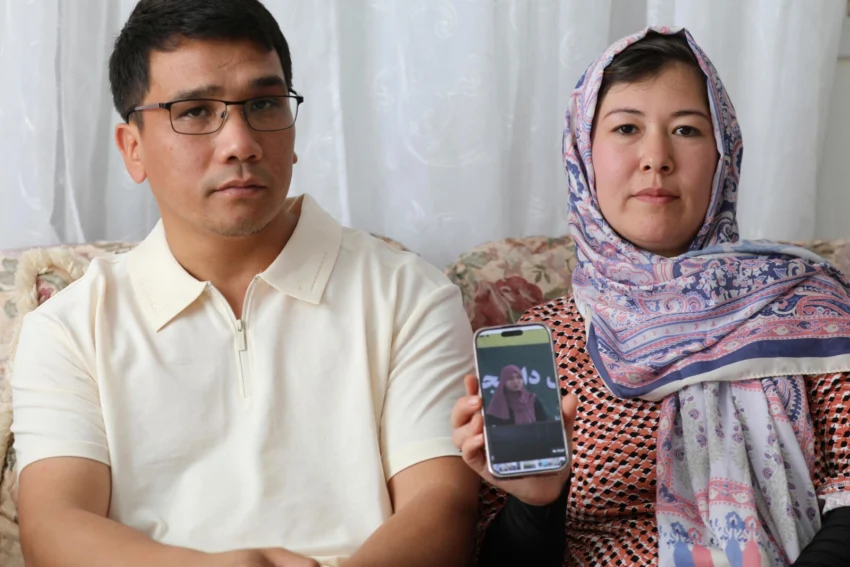
IRMO, S.C. — Mohammad Sharafoddin, along with his wife and young son, fled Afghanistan as refugees nearly a decade ago, enduring a grueling 36-hour trek over mountain passes. Today, in their comfortable suburban home, they reflect on their past and the future they hoped to create for their family.
Their dreams included bringing Nuriya’s niece to the United States, allowing her the chance to pursue an education, perhaps even in medicine. However, those hopes were dashed when a new travel ban from the U.S. government was enacted, prohibiting entry from Afghanistan and several other nations.
“It’s kind of shock for us when we hear about Afghanistan, especially right now for ladies who are affected more than others with the new government,” said Mohammad, expressing concern about the Taliban’s impacts on women’s rights and education. “We didn’t think about this travel ban.”
Since the Taliban’s return to power in August 2021, they have imposed severe restrictions on education for women and girls beyond the sixth grade, limited employment opportunities, and barred women from many public spaces. Last year, they enacted further laws that repress women’s expression in public.
President Donald Trump signed the travel ban, which restricts entry from a list of countries, including Afghanistan, Myanmar, and Iran. The rationale for the ban revolved around security concerns, citing insufficient screening processes in these countries and high percentages of individuals overstaying their visas. Notably, the ban allows exceptions for Afghan individuals holding Special Immigrant Visas who worked with U.S. forces.
Under this new ban, the path to resettle refugees narrows significantly, as Afghanistan was previously a major source of U.S. refugee resettlements, especially following the Taliban’s resurgence.
Sharafoddin, who worked in a factory in Turkey before settling in Irmo, has now established a stable life in America with his family. His 11-year-old son excels in school, and he and his wife have welcomed a daughter who has just turned three. They celebrated the Muslim festival of Eid al-Adha in their home, which they can afford thanks to Sharafoddin’s job at a jewelry workshop.
Nuriya has also embraced her new life, learning English and driving—both previously unattainable under Taliban rule. “I’m very happy to be here now, because my son is very good at school and my daughter also. I think after 18 years they are going to work, and my daughter is going to be able to go to college,” she remarked.
However, their plans to reunite with Nuriya’s niece are now mired in uncertainty. The couple still have hopes for her education and well-being but are heartbroken by the latest news. They haven’t yet told her of the travel ban; it is news too painful to share.
Jim Ray, a volunteer who has aided many refugees in settling in Columbia, highlighted the ongoing anguish that many Afghan families experience due to the travel ban. Many extended families in Afghanistan are facing dire conditions, and the closure of a pathway for aid or reunion only amplifies the suffering.
The Taliban has condemned the travel ban, accusing the U.S. of hypocrisy in its dealings, citing the impact on innocent families seeking refuge from oppression. “Why? Because they claim the Afghan government has no control over its people and that people are leaving the country. So, oppressor! Is this what you call friendship with humanity?” said a Taliban leader.
As the U.S. re-evaluates its policies regarding refugees and family reunification, the struggle for many Afghan families like the Sharafoddins continues, uncertain and filled with hope amid despair.