
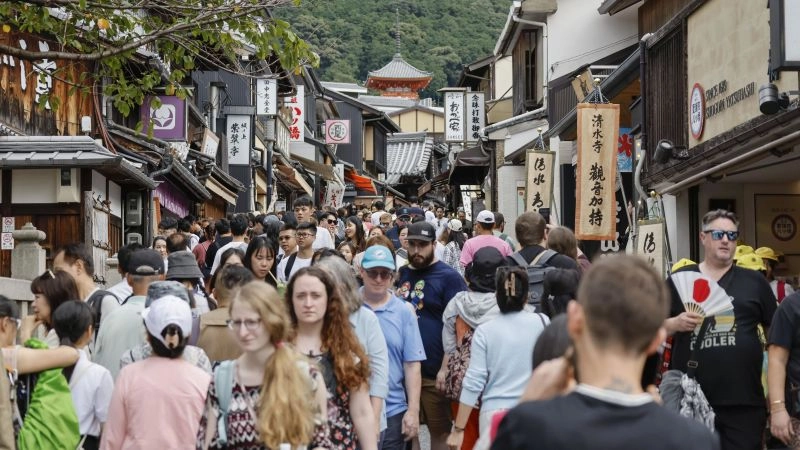
Historic sites crowded with tourists, beaches overrun with towels and umbrellas, and travelers facing legal consequences for unruly behavior—overcrowding is no longer an issue confined to Europe. Asia is experiencing its own tourism crisis, reaching a saturation point that threatens both local residents’ quality of life and the very attractions that draw visitors.
Destinations like Bali, Kyoto, and Phuket are prime examples of this ongoing issue. Gary Bowerman, a travel and consumer trends analyst, notes that popular locations are being overwhelmed not just by international visitors but also by an increasing number of domestic tourists eager to explore their own countries.
In Japan, visitors to iconic spots like the Fushimi Inari Shrine in Kyoto are finding it harder to enjoy their experiences amidst throngs of fellow travelers. Many tourists report that early morning efforts to avoid the crowds are often thwarted by large groups arriving later in the day. This phenomenon is mirrored across Asia, where rising visitor numbers are fueled by factors like reduced airfares, the pent-up demand following the pandemic, and aggressive promotional campaigns.
While the Pacific Asia Travel Association reported significant tourism growth in Northeast Asia during the first half of 2025, concerns over crowd management grow. In Vietnam, UNESCO World Heritage sites like Ha Long Bay and Hoi An are also feeling the impact of increased tourist traffic, leading to a decline in the overall experience for visitors and residents alike.
Despite Thailand’s international visitor numbers declining overall, certain destinations, including Phuket, are still struggling with congestion. The local government is addressing challenges such as traffic, water shortages, and waste management due to tourism. Meanwhile, adventures to nearby islands like Maya Bay reveal similar issues—oceanic landscapes marred by hundreds of boats, detracting from the natural beauty that initially drew travelers.
Overtourism negatively affects not only the environment but also local culture. Nikki Scott, an editor at Southeast Asia Backpacker magazine, emphasizes the detrimental consequences, including environmental degradation and the erosion of local customs to cater to tourists.
Asia’s popular destinations are trying various management strategies, but the results vary. Bali faces critical challenges like waste management and water shortages—problems compounded by an overabundance of visitors. Past instances of success with controlled tourism can be seen in Boracay, where authorities have implemented limits on visitor numbers to allow the island to recover from environmental damage.
Kyoto’s situation is particularly dire. In 2024, over 56 million tourists visited the city, leading to congestion that frustrates both residents and tourists. Many locals express dissatisfaction with the behavior of some tourists, citing a lack of respect for Kyoto’s historical significance.
Despite measures such as bans on unauthorized photography in sacred areas and the introduction of hotel taxes, essential solutions remain elusive. Experts argue that effective strategies must involve stricter controls on tourist flows and capacity limits at popular sites.
In the larger context of Asia, tourism is a key driver of economic growth, often leaving governments hesitant to impose strict regulations that risk deterring potential visitors. This balancing act between nurturing economic benefits and preserving local quality of life appears particularly challenging in the face of increasing visitor numbers.
Travelers seeking to avoid the crowds can still find beauty in under-explored areas or consider timing their visits to off-peak seasons. Engaging with locals can also reveal lesser-known spots that enrich the travel experience without adding to the burden on popular destinations.